SiC MOSFET & SBD Campaign
View the Presentation
3rd-Generation Silicon Carbide (SiC) Technology for High-Voltage Power Systems
Higher efficiency. Lower losses. Better thermal performance.
Toshiba’s 3rd-generation SiC MOSFETs and Schottky Barrier Diodes (SBDs) deliver high efficiency, lower switching losses, and stronger thermal performance across demanding power designs. From EV charging to renewable energy systems, SiC enables cooler, smaller, more efficient power architectures.
Download SiC Slides & Case Studies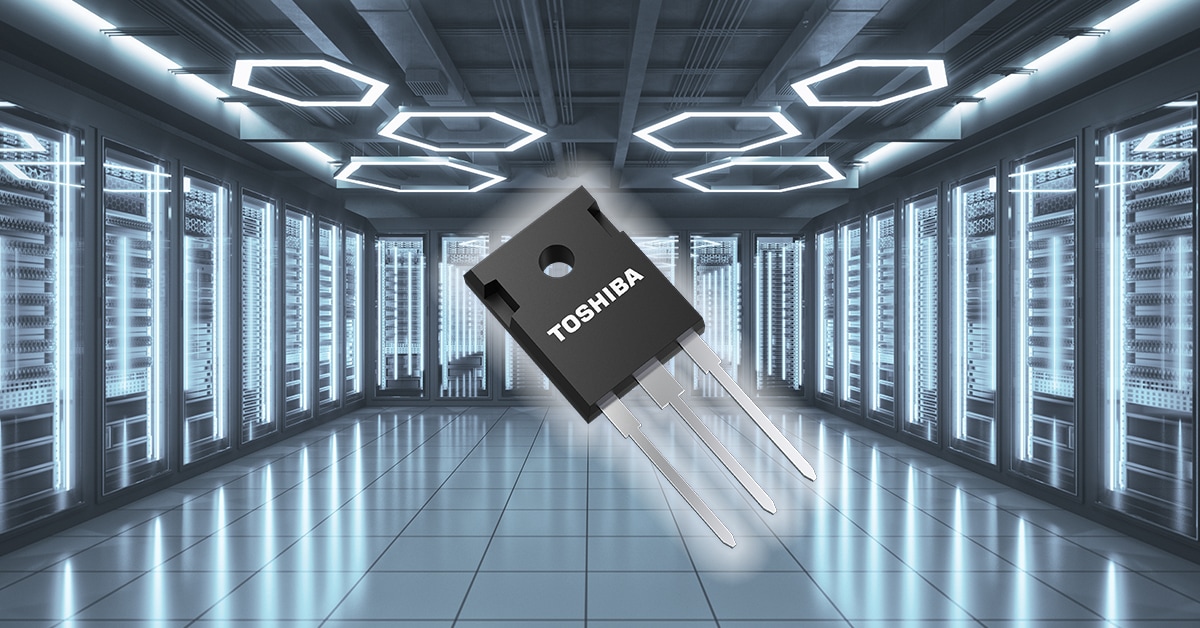
Why SiC Matters in Modern Power Systems
Higher Efficiency Requirements
High-voltage systems face strict efficiency demands. Switching and conduction losses directly impact thermal design, reliability, and system size.
Increasing Thermal Stress
As power density rises, devices must operate reliably at elevated temperatures. SiC maintains stable characteristics where silicon devices degrade.
Voltage & Fast Switching Demands
Applications operating at 650–1200V require devices that support fast switching while maintaining safe voltage margins and reducing system stress.
SiC Power Devices Explained: Efficiency, Switching Performance, and Thermal Tradeoffs
See how Silicon Carbide (SiC) devices improve efficiency, reduce switching losses, and deliver superior thermal behavior in high-voltage designs. This presentation explains key advantages using clear charts and visuals you won’t get from a datasheet alone.
→ Includes a real-world comparison of SiC device characteristics
to
help determine the optimal solution for high-efficiency power designs.
→ Watch full 9.32 presentation after submitting form
Why Watch This Video
Compare SiC device options to determine the right tradeoffs for efficiency, switching performance, and thermal behavior.See a detailed comparison of SiC power device characteristics, showing how different architectures impact switching losses, thermal performance, and system efficiency in high-voltage power designs.
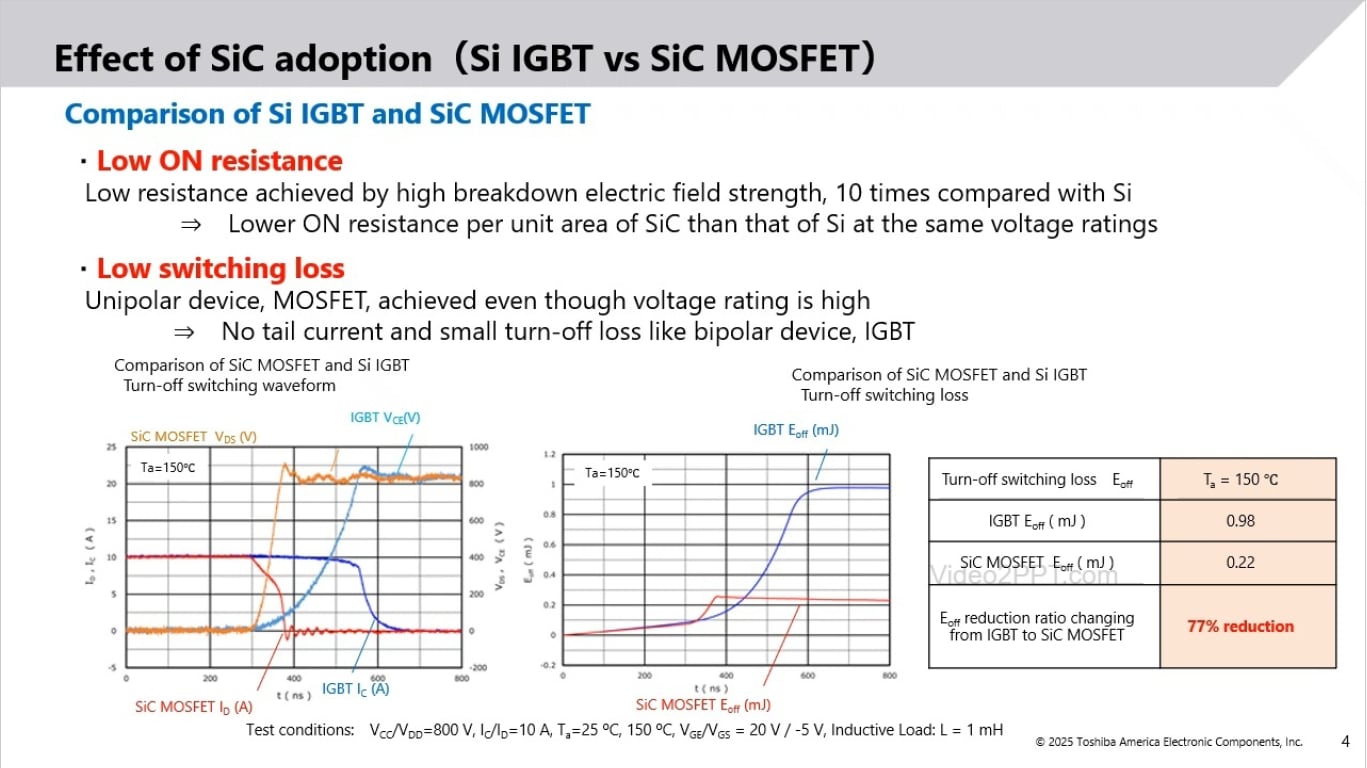
Lower switching losses and improved thermal margins
How Toshiba SiC Improves System Efficiency
Toshiba’s SiC MOSFETs and SBDs reduce conduction and switching losses, maintain stable thermal behavior, and enable higher switching frequencies. Designers benefit from simplified thermal management and smaller magnetics, providing measurable efficiency gains compared to Si IGBTs.