

- General Top
- SEMICONDUCTOR
- STORAGE
- COMPANY
-
My ToshibaSemicon
- Semiconductor Top
-
ApplicationsAutomotive
Body Electronics
xEV
In-Vehicle Infotainment
Advanced Driver-Assistance Systems (ADAS)
Chassis
IndustrialInfrastructure
BEMS/HEMS
Factory Automation
Commercial Equipment
Consumer/PersonalIoT Equipment
Healthcare
Wearable Device
Mobile
Computer Peripherals
-
ProductsAutomotive Devices
Discrete Semiconductor
Diodes
Transistors
Logic ICs
Analog Devices
Digital Devices
Wireless Devices
※
 : Products list (parametric search)Power Semiconductors
SiC Power Devices
※
: Products list (parametric search)Isolators/Solid State RelaysPhotocouplers
Digital Isolators
Solid State Relays
Fiber Optic Transmitting Modules
※
: Products list (parametric search)MOSFETsIGBTs/IEGTsBipolar Transistors※
: Products list (parametric search)Diodes※
: Products list (parametric search)MicrocontrollersMotor Driver ICsIntelligent Power ICs※
: Products list (parametric search)Power Management ICsLinear ICs※
: Products list (parametric search)General Purpose Logic ICsLinear Image SensorsOther Product ICsOther Product ICs
※
: Products list (parametric search) -
Design & Development
-
Knowledge
- Where To Buy



- Part Number & Keyword Search
- Cross Reference Search
- Parametric Search
- Stock Check & Purchase
This webpage doesn't work with Internet Explorer. Please use the latest version of Google Chrome, Microsoft Edge, Mozilla Firefox or Safari.
require 3 characters or more. Search for multiple part numbers fromhere.
The information presented in this cross reference is based on TOSHIBA's selection criteria and should be treated as a suggestion only. Please carefully review the latest versions of all relevant information on the TOSHIBA products, including without limitation data sheets and validate all operating parameters of the TOSHIBA products to ensure that the suggested TOSHIBA products are truly compatible with your design and application.Please note that this cross reference is based on TOSHIBA's estimate of compatibility with other manufacturers' products, based on other manufacturers' published data, at the time the data was collected.TOSHIBA is not responsible for any incorrect or incomplete information. Information is subject to change at any time without notice.
require 3 characters or more.
Motor Driver ICs
The demand of selecting the right motor driver to optimize the motor control for various of applications is increasing.
Toshiba's motor drivers have been on the market for over 40 years, and are being developed by customer demand bases.
Our motor driver portfolio can offer solutions to multiple applications such as low voltage demands for battery operated applications, and to higher voltage demands like air conditioner fan motors.
A motor driver IC controls the power delivered to a motor based on commands from a controller. Toshiba offers separate motor-driver families for brushed DC motors, brushless DC motors, stepping motors, and gate-driver applications, covering low-voltage battery-operated designs through higher-voltage motor applications.
Start by identifying the motor type, then compare the required supply voltage, motor current, control interface, number of channels or phases, and required protection functions. Toshiba’s motor-driver selection resources organize products by motor type and provide voltage, current, control, package, and protection information for device selection.
Lineup
Cross Reference Search
require 3 characters or more.
About information presented in this cross reference
The information presented in this cross reference is based on TOSHIBA's selection criteria and should be treated as a suggestion only. Please carefully review the latest versions of all relevant information on the TOSHIBA products, including without limitation data sheets and validate all operating parameters of the TOSHIBA products to ensure that the suggested TOSHIBA products are truly compatible with your design and application.Please note that this cross reference is based on TOSHIBA's estimate of compatibility with other manufacturers' products, based on other manufacturers' published data, at the time the data was collected.TOSHIBA is not responsible for any incorrect or incomplete information. Information is subject to change at any time without notice.
Documents
Motor Driver IC FAQs
What is a motor driver IC and how does it work?
A motor driver IC provides the drive function between a controller and the motor. It switches and controls the electrical power applied to the motor so the system can manage functions such as rotation, speed, direction, or position. Toshiba provides different driver families for brushed DC, brushless DC, stepping motors, and gate-driver applications.
How do I choose the right motor driver IC?
Start with the motor type, then match the driver to the required supply voltage and motor current. Next, compare control method, channel or phase requirements, package, and protection functions.
What is the difference between brushed DC, brushless DC, and stepper motor drivers?
The required driver depends on how the motor is constructed and controlled. Brushed DC drivers control brushed motors, brushless DC drivers support electronically commutated brushless motors, and stepper drivers control motor phases in discrete steps for position or motion control. Toshiba maintains dedicated driver lineups for each motor type.
What voltage and current ratings should I consider when selecting a motor driver?
The driver must support the motor’s required supply voltage and current while meeting the design’s thermal and protection requirements. Toshiba’s selection guide lists voltage and current ratings by device, along with control and protection features. Final device selection should be validated against the latest product datasheet and application conditions.
What is an H-bridge motor driver?
An H-bridge is a driver topology commonly used with brushed DC motors that allows the voltage across the motor to be reversed, enabling bidirectional motor control. Toshiba offers H-bridge motor-driver devices, including products with functions such as current monitoring for consumer and industrial motor-control applications.
Technical topics
e-Learning
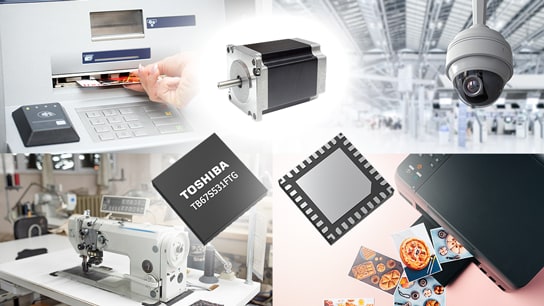
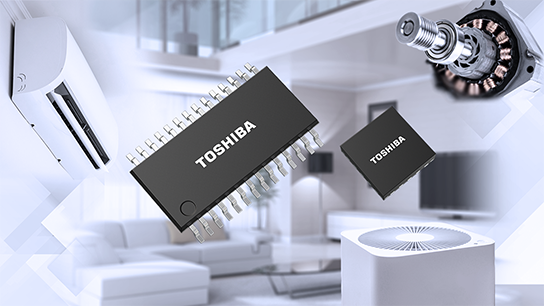
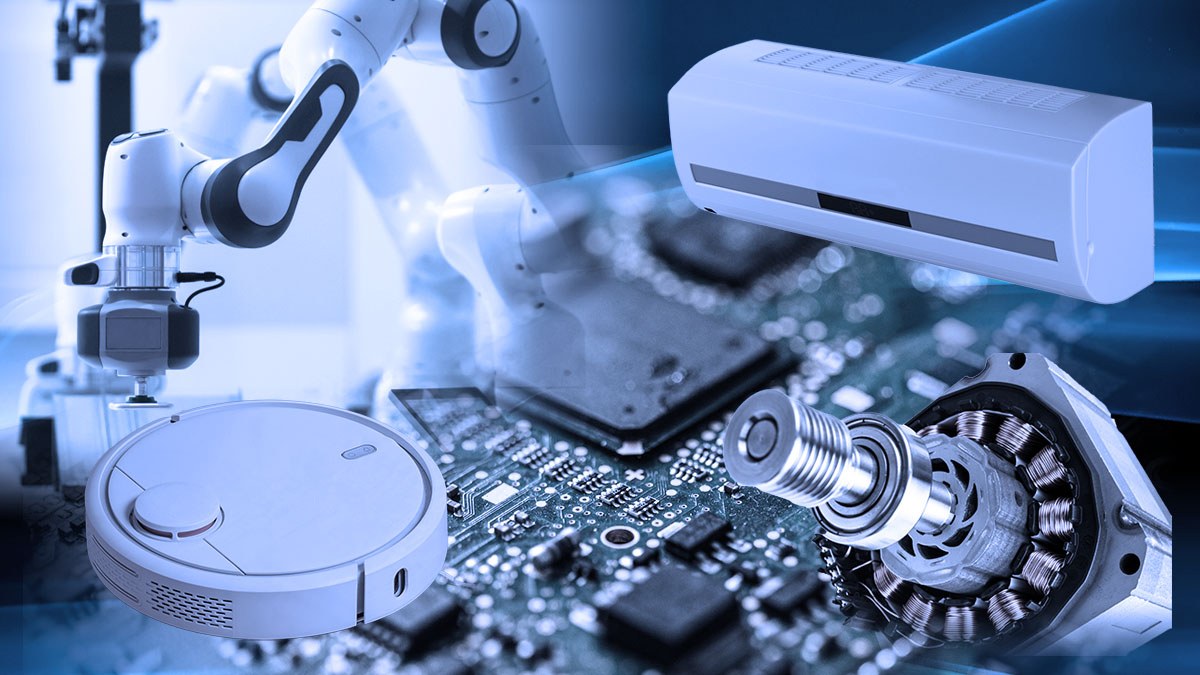
Product introduction video


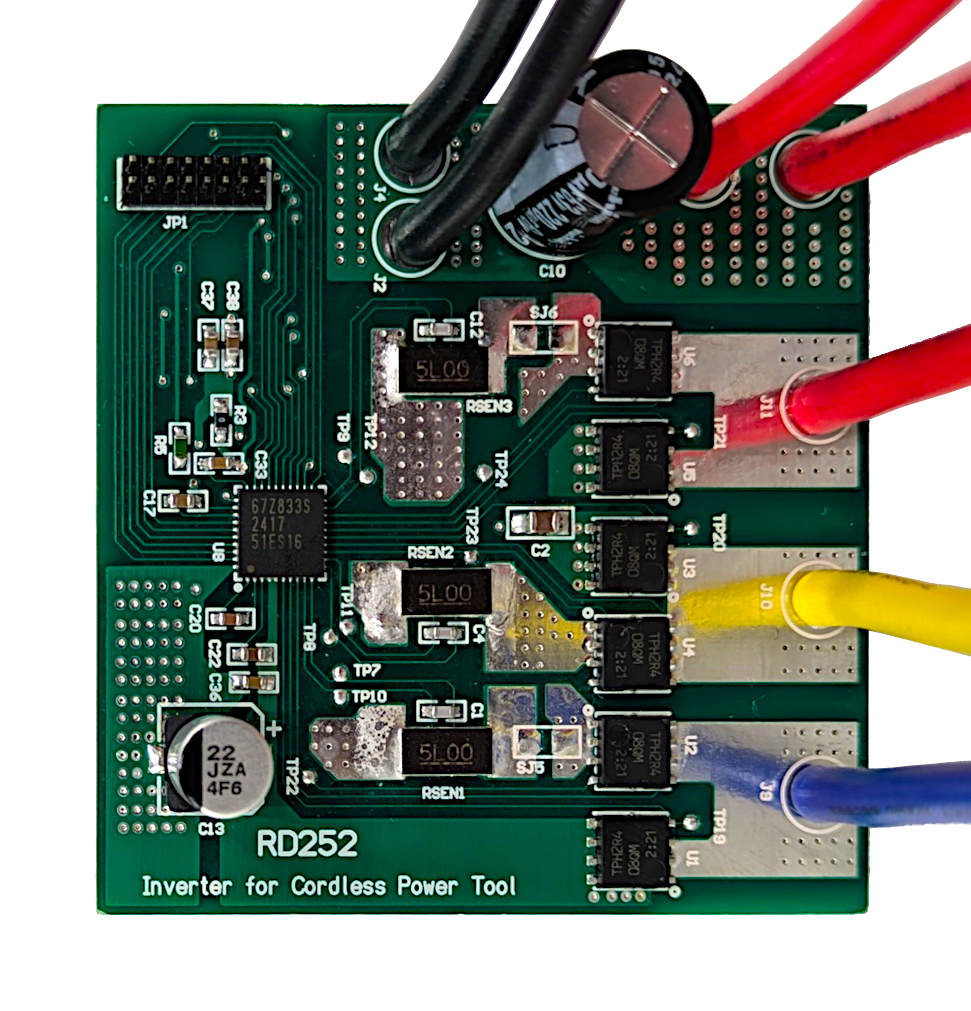
Reference Design

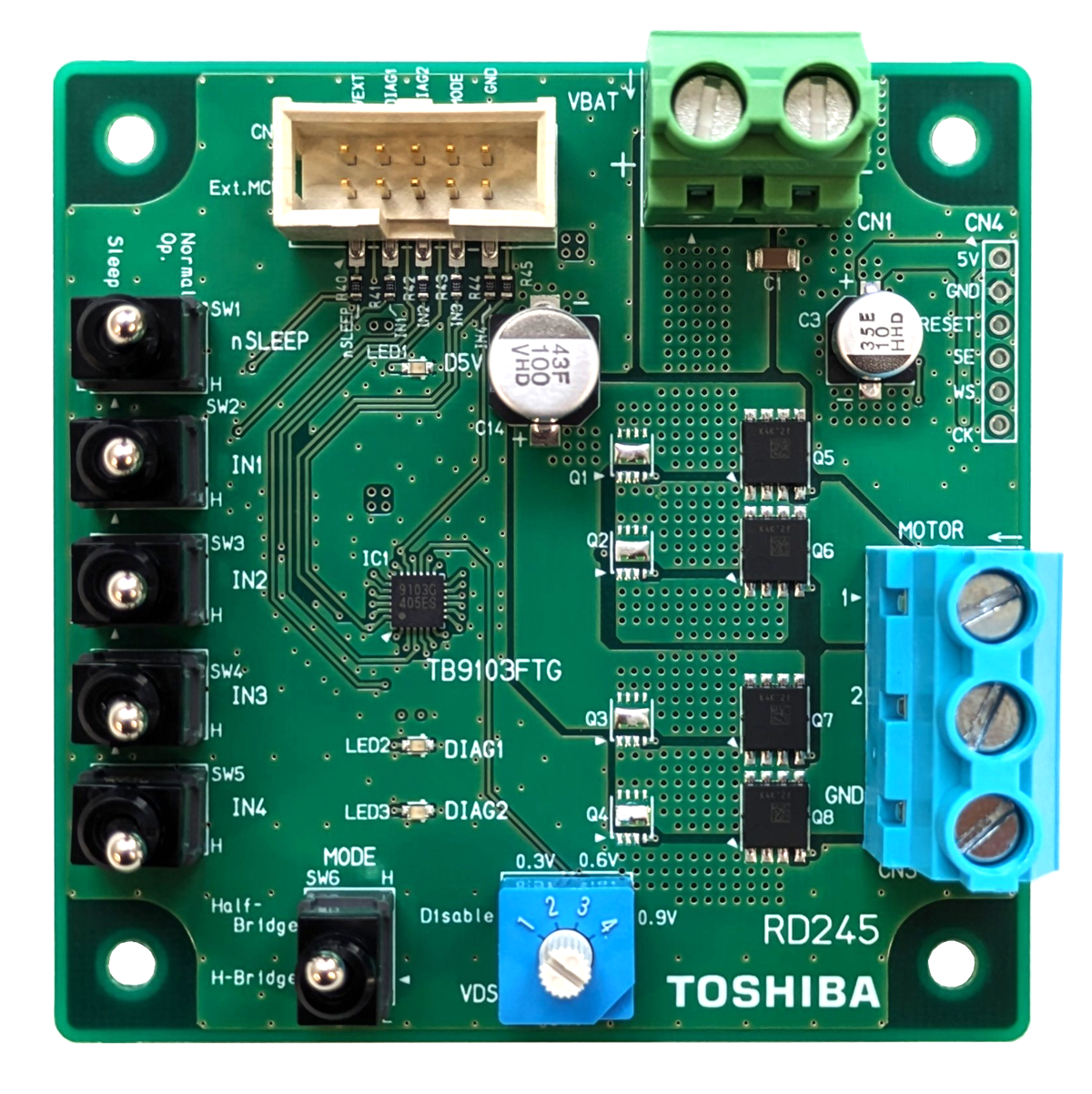

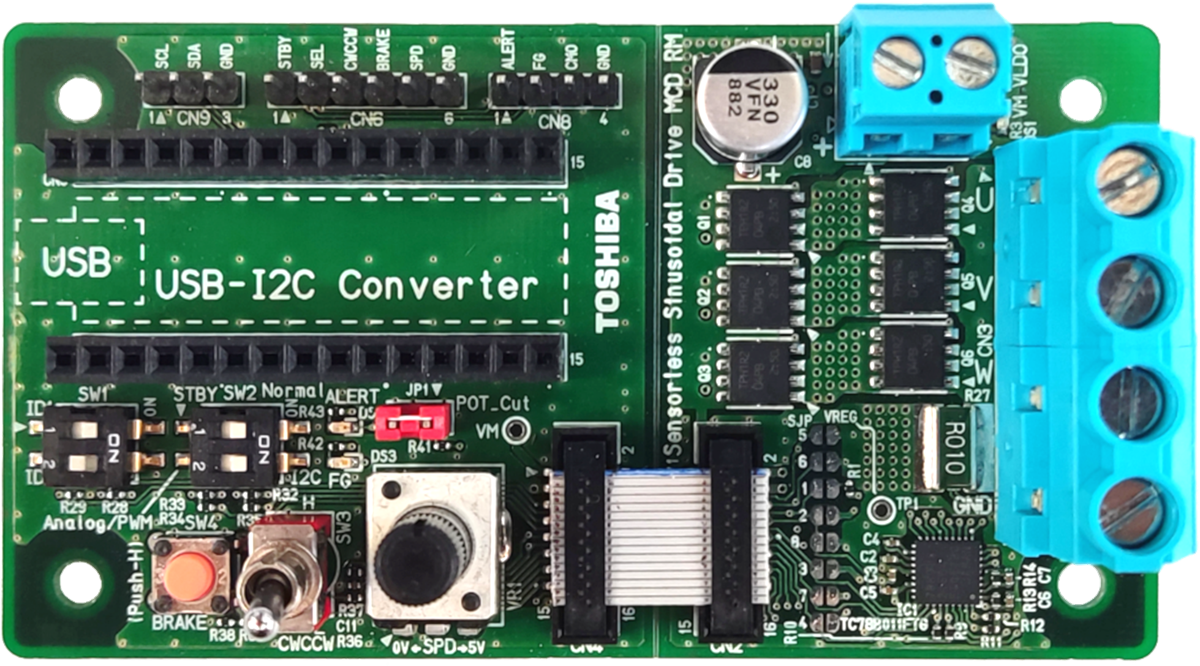


News / Latest information
Tool & Software
| Vendor name | Evaluation board list | Evaluation board example for motor driver IC | |
|---|---|---|---|
 Mikroe |
Click for evaluation board list | TB67H450FNG board
|
TB67H451FNG board
|
| Marutsuelec Co., Ltd. | Click for evaluation board list |
TB67S128FTG board MTO-EV033 (TB67S128FTG)  |
TC78B025FTG board |
AKIZUKI DENSHI TSUSHO CO.,LTD. |
Click for evaluation board list | TB67H450FNG board
|
TC78H653FTG board
|
| SparkFun Electronics, Inc. | Click for evaluation board list | TC78H670FTG board
|
|


Related information
For over 40 years, Toshiba has been manufacturing and supplying innovative motor drivers for a wide range of markets. Toshiba's Brushless DC Motor Driver ICs (BLDC), Brushed DC Motor Driver ICs and Stepping Motor Driver ICs are ideal for automotive and industrial applications with varying power supply requirements. BLDC motor driver designed to optimize development procedure by utilizing Intelligent Phase Control. Brushed DC motor driver circuit is ideal for high efficiency and high performance in applications such as electric motors. Stepper Motor ICs overcome motor stalling by using a "Active Gain Control" architecture to increase precise position accuracy.
* Company names, product names, and service names may be trademarks of their respective companies.