- General Top
- SEMICONDUCTOR
- STORAGE
- COMPANY
-
My ToshibaSemicon
- Semiconductor Top
-
ApplicationsAutomotive
Body Electronics
xEV
In-Vehicle Infotainment
Advanced Driver-Assistance Systems (ADAS)
Chassis
IndustrialInfrastructure
BEMS/HEMS
Factory Automation
Commercial Equipment
Consumer/PersonalIoT Equipment
Healthcare
Wearable Device
Mobile
Computer Peripherals
-
ProductsAutomotive Devices
Discrete Semiconductor
Diodes
Transistors
Logic ICs
Analog Devices
- Automotive SmartMCD™ (Integreted SoC Conbining Microcontroller and Driver)
- Automotive Brushless Motor Driver ICs
- Automotive Brushed DC Motor Driver ICs
- Automotive Stepping Motor Driver ICs
- Automotive Driver ICs
- Automotive System Power Supplies ICs
- Automotive audio power amplifier ICs
- Automotive Network Communication
Digital Devices
Wireless Devices
※
 : Products list (parametric search)Power Semiconductors
SiC Power Devices
※
: Products list (parametric search)Isolators/Solid State RelaysPhotocouplers
Digital Isolators
Solid State Relays
Fiber Optic Transmitting Modules
※
: Products list (parametric search)MOSFETsIGBTs/IEGTsBipolar Transistors※
: Products list (parametric search)Diodes※
: Products list (parametric search)MicrocontrollersMotor Driver ICsIntelligent Power ICs※
: Products list (parametric search)Power Management ICsLinear ICs※
: Products list (parametric search)General Purpose Logic ICsLinear Image SensorsOther Product ICsOther Product ICs
※
: Products list (parametric search) -
Design & Development
Design & Development
Innovation Centre
At the Toshiba Innovation Centre we constantly strive to inspire you with our technologies and solutions. Discover how to place us at the heart of your innovations.
-
Knowledge
Knowledge
Highlighted Topics
Further Materials
Other
- Where To Buy




- Part Number & Keyword Search
- Cross Reference Search
- Parametric Search
- Stock Check & Purchase
This webpage doesn't work with Internet Explorer. Please use the latest version of Google Chrome, Microsoft Edge, Mozilla Firefox or Safari.
require 3 characters or more. Search for multiple part numbers fromhere.
The information presented in this cross reference is based on TOSHIBA's selection criteria and should be treated as a suggestion only. Please carefully review the latest versions of all relevant information on the TOSHIBA products, including without limitation data sheets and validate all operating parameters of the TOSHIBA products to ensure that the suggested TOSHIBA products are truly compatible with your design and application.Please note that this cross reference is based on TOSHIBA's estimate of compatibility with other manufacturers' products, based on other manufacturers' published data, at the time the data was collected.TOSHIBA is not responsible for any incorrect or incomplete information. Information is subject to change at any time without notice.
require 3 characters or more.
eFuses bring intelligence to power protection
Fuses have existed since the discovery of electricity, providing a way to disconnect a load during overcurrent conditions. These simple devices were low cost, simple to use and reliable. However, they lacked flexibility and required physical replacement after they had operated, which could be highly inconvenient depending upon the location of the equipment they were deployed in.
Conventional fuses are sacrificial devices that contain a thin wire that melts during overcurrent conditions, thereby disconnecting the load. This prevents damage to power sources and loads, eliminating any risk of overheating or fire as well as safeguarding users from a potential electric shock due to the fault.
In systems that are located nearby and not sealed, conventional fuses are often adequate, however there are significant limitations – especially in more complex systems.
Firstly, the time taken to ‘blow’ depends upon the current applied and there may be a significant delay before disconnection, permitting damage to occur. This is further compounded by the wide (+/-25%) tolerance of these devices.
Complex systems, such as those containing inductive or capacitive elements can experience large inrush currents on startup which is particularly challenging in the context of conventional fuses.
Fuse technology has advanced to include resettable devices such as polymeric positive temperature coefficient (PPTC) devices. PPTCs increase resistance as they heat due to an overcurrent and return to normal as the heat subsides. This can be useful in interfaces (such as USB) but PPTCs remain slow to react, they do not disconnect the load completely and they are affected by ambient temperature.
Increasingly, sophisticated modern electronic systems require more advanced protection that is able to deal with a variety of situations while providing comprehensive protection that is fast acting. eFuses were invented to address this need.
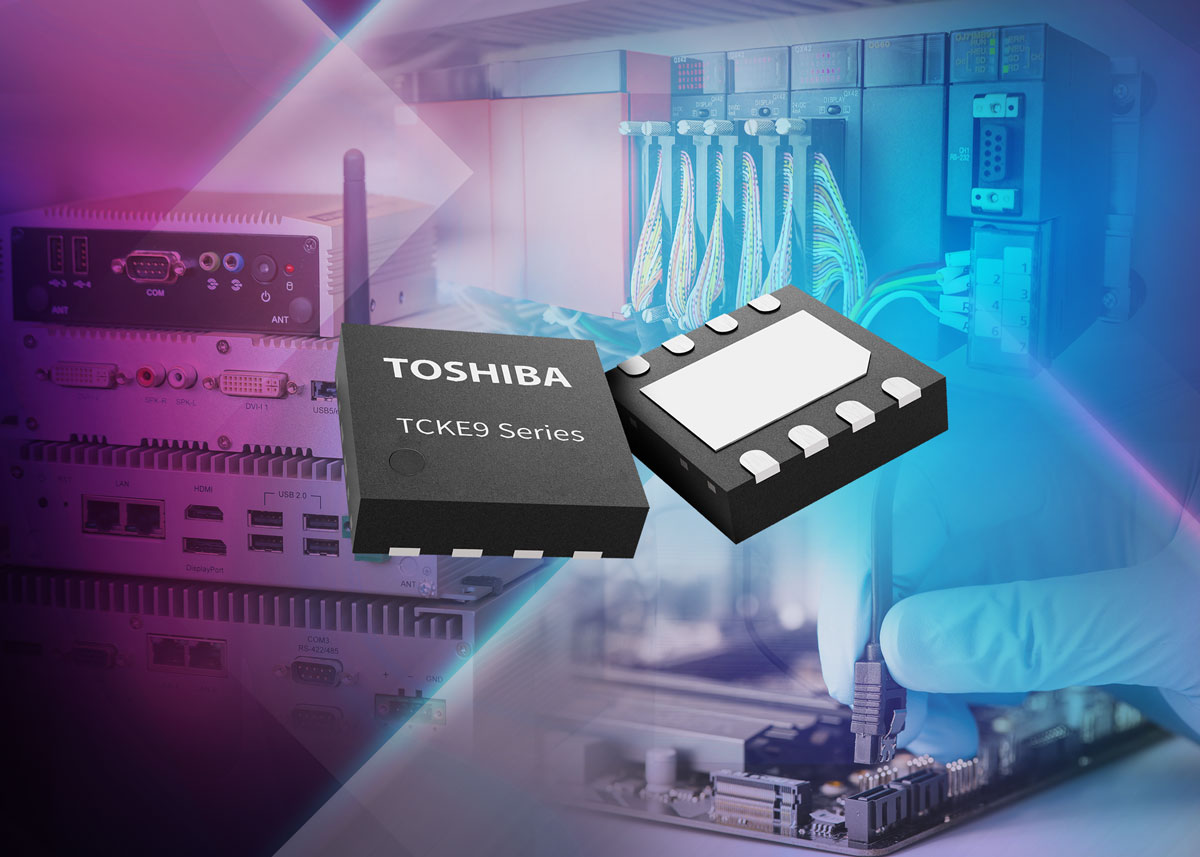
eFuse devices are based upon a MOSFET that is controlled by an integrated current-sensing circuit. Should the current exceed a definable threshold, the MOSFET opens rapidly (<1uS), preventing damage to the system. As solid-state devices, eFuses are resettable, either automatically or via a signal from a microcontroller, enabling rapid recovery and reducing downtime.